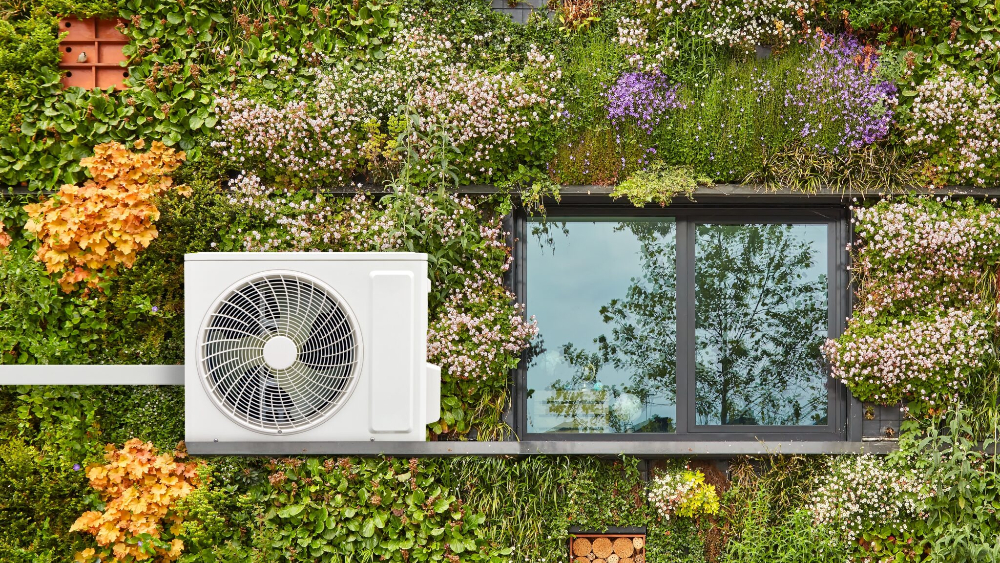
In areas where a district heating network is not the most suitable solution, the government will promote and standardize hybrid and smart heat pumps starting in 2029. This is evident from a letter to the House of Representatives. “However, where possible, a fully electric heat pump is preferred.”
According to the government, it is crucial to invest in energy security and affordable energy. In recent years, an increasing number of households have already switched from a central heating boiler to a (hybrid) heat pump. That is a positive development, notes Housing Minister Boekholt-O’Sullivan, but progress is too slow.
“The current pace at which central heating boilers are being replaced by heat pumps is too slow to make all buildings natural gas-free by 2050,” the minister writes, even though this is mandatory. And so she is announcing measures. “In areas where no district heating network will be installed, the smart heat pump will become the new standard when replacing central heating boilers.”
She does point out, however, that this step is only possible if a hybrid heat pump is “sufficiently attractive.”
“It must be simple, feasible, and economically viable,” the minister writes. The government plans to work with the market to remove barriers. For example, the costs of purchase, installation, and operation must be reduced. Another condition is that there must be sufficient installation capacity to install and maintain heat pumps.
Standards
The intention is to incorporate the standards into the Building and Living Environment Decree (Bbl). The plan is to tighten the existing efficiency requirements for heating systems.
“This requirement is technology-neutral and is formulated in such a way that a hybrid heat pump meets it. A system that heats even more efficiently, such as a fully electric heat pump, also meets the standard, but heating solely with less efficient methods—such as a central heating boiler, infrared panels, or an electric heater—does not.”
Capital destruction
The standard takes effect in 2029 and applies when a central heating boiler is replaced. “This usually happens when moving, renovating, or at the end of the boiler’s service life. This is a clear and logical time for homeowners and building owners and ensures that no capital is wasted.”
To minimize the impact on the power grid and grid congestion, a hybrid heat pump must be smart. This means it must be programmable—for example, a heat pump can be set and controlled to heat outside of peak times on the power grid or when electricity prices are low. This reduces both residents’ energy costs and the load on the grid.
Apartments and historic buildings are less suitable
With this step, the Netherlands is slowly but surely phasing out the central heating boiler. Not entirely, however, as the minister notes that heat pumps are not desirable in certain situations, such as in apartment buildings, where there isn’t always space for them or where noise pollution is a concern. Historic buildings would also be less suitable for them.
Simply mandating hybrid heat pumps is also not enough to comply with European regulations requiring a transition to a natural gas-free system by 2050. However, the minister states: “A hybrid heat pump gives a building owner sufficient time between 2030 and 2050 to, for example, address the building’s (insulation) envelope, so that the transition to natural gas-free can then be made.”
Summer of 2027
The minister aims to have a proposal for the hybrid heat pump mandate on paper by next spring. The plan is for it to enter the consultation phase in the summer of 2027. According to the minister, it is not feasible to have the mandate take effect before 2029.
Incidentally, she encourages building owners to go “all-in” wherever possible: Boekholt-O’Sullivan: “Where possible, the installation of a fully electric heat pump is preferred, as this can also eliminate the costs of remaining gas consumption and the gas connection. In all cases, a smart heat pump is important for controlling household energy bills.”

This is an article from Construction and Installation Hub. Want to keep up with all the news from the construction and installation industry? Then take a look at the hub and sign up for the online community.
↗