“Don’t jump to conclusions right away when a new housing development plan is proposed,” my colleague Nicole Maarsen reminded me. She’s right. “From Plan to Home” is a comprehensive package that effectively combines new measures with existing policies. We won’t get very far by standing on the sidelines and just pointing out what’s missing.
That doesn’t mean critical questions are unnecessary. Amid the political pressure to “build, build, build,” spatial quality, livability, and future-proofing can easily get lost in the shuffle. Moreover, a measure only counts if it actually causes parties to act differently and enables homes to be built sooner. I therefore read through the fifty actions with one question in mind: what else is needed to make this work?
The supply chain is clearly mapped out
The analysis is better than in many previous plans. The cabinet does not pin the blame on a single party in appeal proceedings, nitrogen regulations, or a shortage of civil servants, but rightly describes housing construction as a chain. Land, financial feasibility, infrastructure, grid capacity, nitrogen allowances, permits, and construction capacity must all be available at the right time. Resolving a single bottleneck does not result in a new home if the project subsequently gets stuck at the next obstacle.
But a thorough analysis is not yet an implementation strategy. Among the fifty actions are concrete interventions alongside existing policies, studies, pilot projects, and roundtables. What’s missing is a distinction based on impact: which actions accelerate the start of construction projects, which pave the way for structural change, and which primarily keep the existing system running? All three are relevant, but in the short term, what matters most is which projects can begin sooner as a result of which intervention.
Not just scale, but also potential for acceleration
The plan places a strong emphasis on large-scale housing development sites. These are important for the long term, but they are also the most complex. They require substantial investments, involve many stakeholders, and often face multiple obstacles at the same time. Therefore, having many housing units on a single map does not automatically translate to many housing units in the short term.
An additional track for medium-sized projects and transformations can help. It is precisely in these cases that one or two solvable problems sometimes hold up the start of construction: a funding shortfall, a utility connection, a permit, a land issue, or a stalled decision. With targeted support, such projects can get underway sooner than large-scale area developments that still require years of preparation.
A breakthrough portfolio could make such a “second track” visible. For each project, the number of homes, bottlenecks, potential interventions, and decision points are summarized on a single page. This shifts the focus of the discussion from the number of meetings to the number of demonstrably accelerated construction starts. The 230 FTEs deployed to get projects moving would therefore only need to be held accountable based on a single KPI: the number of homes for which construction actually began earlier than planned.
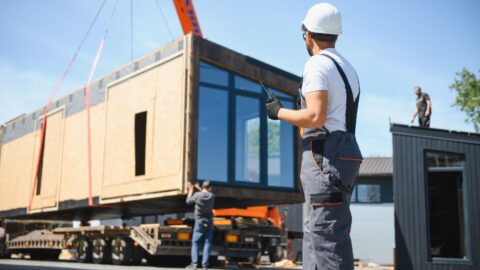
Industrial construction fits into this picture, but it is not the entire solution. The goal of having half of all homes built industrially by 2030 has been in place for some time. Without predictable contracts and repeatable requests for proposals, such a percentage will not fill a factory. National approval can simplify the technical assessment, but it does not resolve a land shortage, an unfeasible business case, a lack of utility connections, or an administrative impasse. The biggest delays often occur before construction even begins.
From Collaboration to Breakthrough Potential
The government is strongly committed to collaboration. There will be implementation agreements, additional expertise, a revamped National Acceleration Task Force, and more opportunities for administrative escalation. The government also intends to make more frequent use of existing tools under the Environment Act.
That can help, but collaboration isn’t the same as the power to break through. When is a project considered to have stalled? Who takes the lead then? Within what timeframe must a decision be made? And what happens if the parties can’t reach an agreement?
These questions are all the more important because infrastructure, grid capacity, nitrogen, taxation, and housing funds fall under the purview of different ministries. When each party is primarily responsible for its own regulations and budget, no one is left responsible for the construction process as a whole. I know from experience that interagency cooperation is no panacea in this regard.
For each selected breakthrough, therefore, one administrative official should be designated, with a decision-making timeline, an escalation process, and, where necessary, an immediately available budget. At the administrative level, too, it helps if it is clear in advance who will make the decision once collaboration no longer yields results.
Policy, too, can create new obstacles
Not all delays stem from factors outside housing policy. Policy decisions, too, can cause projects to stall again, whether financially or technically. The debate over the “two-thirds affordable” requirement illustrates this. Affordable housing remains essential, but a percentage target is of little value if it prevents a project from getting off the ground at all. This raises the question of who can adjust the program, land price, subsidies, or requirements—and what we ultimately prioritize: a standard within a project or the number of affordable homes that are actually built.
The same applies to future national and European regulations. Housing projects have a lead time of four to eight years and inevitably face new requirements regarding energy, climate, water, soil, and the environment along the way. The question, therefore, is not whether the framework conditions will change, but how projects can incorporate those changes without getting bogged down again.
New requirements are often necessary, but a project that has been in the works for years cannot incorporate them midway through without consequences. This requires timely notice, predictable effective dates, transition periods, and agreements regarding additional costs.
That was precisely the original purpose of the Collaborative Agenda for Future-Proof Area Development: to serve as the basis for a national framework through which new standards can be predictably implemented in ongoing projects. The Collaborative Agenda for Future-Proof Area Development is still mentioned, but it hardly serves as a platform for implementing new standards. As a result, future-proofing risks becoming a mere accumulation of wishes, whereas it should be part of the acceleration process. The statutory minimum standard must not, unnoticed, become the ceiling on quality.
Who pedals and who shifts gears?
The action plan highlights where housing construction is stalling. Ultimately, this boils down to a choice: which projects do we want to start sooner, and which measures will make the difference in doing so? That choice will only be credible if it is backed by specific names, deadlines, budgets, and decision-making authority.
We have a bicycle that doesn’t go fast enough. This plan oils the chain and inflates the tires in many areas. That’s helpful. But riding faster also requires someone to pedal, shift gears at the right time, and choose the route. If the government also organizes that capacity for change, the bicycle can truly pick up speed. Then the fifty actions will become a program that we can actually work on together.

This is an article from Construction and Installation Hub. Want to keep up with all the news from the construction and installation industry? Then take a look at the hub and sign up for the online community.
↗