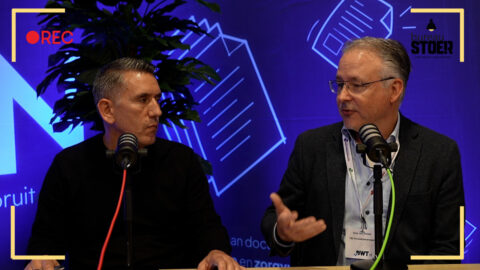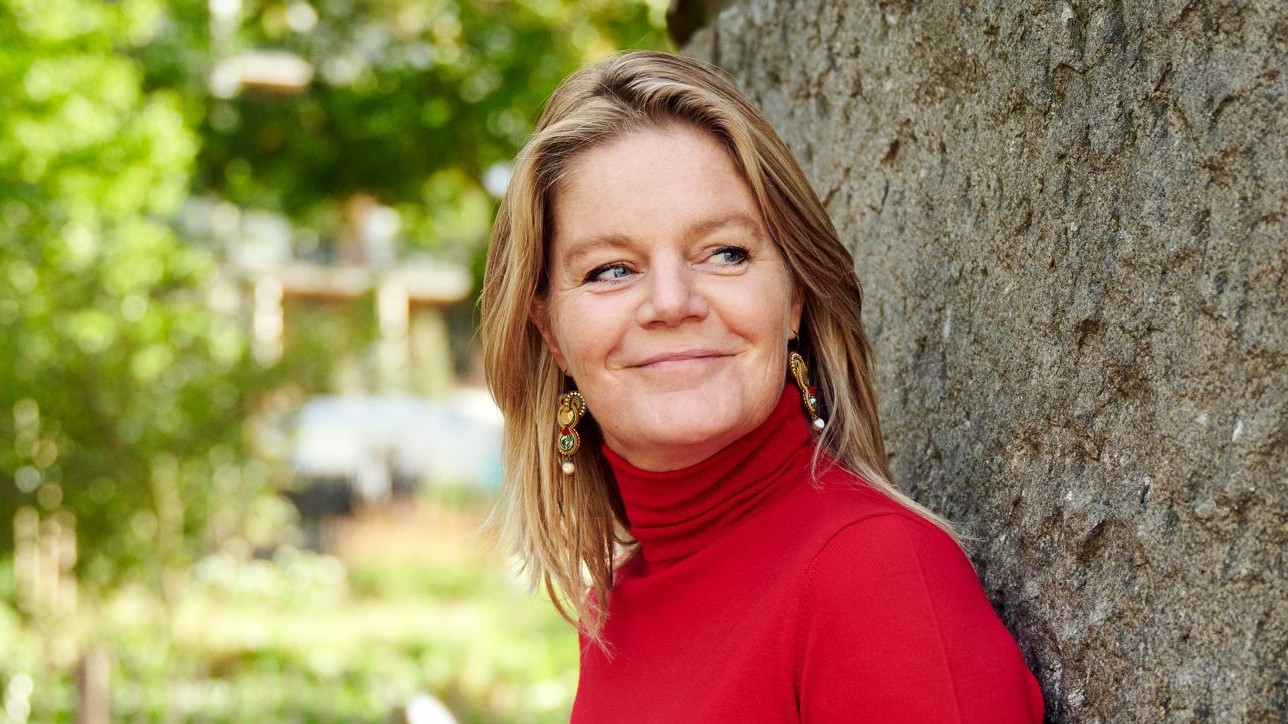
Parametric Designing. Data-driven area development. What will AI bring to the future of building? 'A lot,' predicts Nicole Maarsen, who is driving digital building on behalf of the Ministry of Housing and Spatial Planning. 'But then the industry still has to overcome a few hurdles. The most important one? Fear.'
Developing areas today is no easy task. Space is mostly limited and the challenges in terms of nitrogen, logistics, CO2 savings and noise pollution, are getting bigger and bigger. According to Nicole Maarsen, administrative booster of the national Housing Acceleration Table at the Ministry of Housing and Spatial Planning, there is nothing to do but embrace the "new" building. 'Integral,' she says, can only be done 'digitally.' What's more, she says it even leads to fewer objection procedures, another 'shortcoming' of our time.
By the way, Maarsen prefers to talk about "data-driven area development. In Rotterdam, they are now gaining initial experience with this and the intention is that more areas will soon follow. But what does this phenomenon look like? What is going well and what are those involved still struggling with? Time for an interview.
'Data-driven area development helps us tackle major housing and livability challenges faster, smarter and more transparently,' Maarsen begins her story on a weekday in an Amsterdam Café.
'It's not about technology for technology's sake, but about making better choices for people and their environment. With data, we can calculate scenarios, work together more integrally and give administrators and residents more control over the future of their neighborhoods.'
Is there no other option?
“That’s right. We not only need to build better and healthier homes, but also faster. That’s no longer possible using traditional methods of planning, development, and construction.”
You’re talking about data-driven area development. What does that mean in plain language?
“The smart combination of different types of data to make better decisions regarding housing construction and quality of life.” Traditionally, many different analyses during the planning phase take place sequentially (one after another, ed.). Now there are tools available to use large amounts of data simultaneously and holistically to analyze areas and plans for opportunities and bottlenecks and to run through different scenarios. What is the impact or effect on an area if we do this, that, or something else entirely? And best of all: we can visualize it, too.”
In Rotterdam, you’re now gaining your first experiences with data-driven area development. What are the results?
“Fasterprocesses, faster issuance of permits, and, in addition, better decision-making and transparency toward residents and policymakers. This, in turn, leads to greater engagement and faster acceptance: the more you can show the community how new construction plans will play out from different perspectives, the lower the risk of objections to area development. ‘Computer says no’ is often accepted more readily than a decision made by an advisor or the Mayor and Aldermen. And it’s fun, too, because we’re also seeing that collaborations are becoming more creative.’
What does this approach do away with?
“Fragmentation and inefficiency. No, not so much existing jobs, but rather old ways of working.”
Is there any resistance?
“… Healthy caution, especially regarding privacy and democratic safeguards in decision-making.”
How do you handle that in Rotterdam?
“Byworking transparently, applying privacy-by-design, and involving residents and policymakers. Where does the hesitation lie? In the questions: Can we really trust the data, and what does this mean for my role?”
... 'But again: the first experiences are promising. Connecting systems, however, remains a challenge. In addition, culture change and technology simply take time.'
More pilot projects will follow Rotterdam’s lead. What is needed to further scale up this approach nationwide?
“Standardization, training, administrative support, and a robust digital infrastructure.”
Do data-driven development projects actually look different?
“That’s certainly the goal. It leads to neighborhoods where housing, energy, and mobility are better balanced.”
Digibouw 2025
Nicole Maarsen is one of the speakers at Digibouw 2025. During this event, which takes place at the Jaarbeurs on November 19 and 20, she will discuss data-driven area development in detail. You can be there. Register here for free.

This is an article from Construction and Installation Hub. Want to keep up with all the news from the construction and installation industry? Then take a look at the hub and sign up for the online community.
↗