There is a great deal of innovation in the construction sector, but those promising innovations almost never get off the ground. It is simply not possible to make innovations part of everyday practice, as Jan Willem van de Groep observes in this issue of Zichtlijnen. He points out a painful lesson: “Innovations with real potential fail because the ecosystem remains stagnant.”
Every few years, a new solution emerges that promises to change the sector forever: the factory-built home; renovation as a mass-produced product; The plug-and-play energy module or the road that doubles as a solar panel. From 3D-printed houses and robots for skilled tradespeople to the fully biobased supply chain from farm to building; time and again, the promise is grand, the presentation convincing, and the pilot project extremely photogenic.
And yet, after analyzing a few decades of developments, what remains is primarily a long list of unfulfilled promises. Think of the Solaroad, small wind turbines, hydrogen boilers, Katerra, Bouwboeren, and countless revolutionary housing concepts. They didn’t all fail in the same way, and they certainly weren’t always technically inferior. Sometimes they were even downright impressive. But almost all of them illustrate the same painful reality: innovation is still a long way from being a transition.
Three categories of failure
Anyone who analyzes these unfulfilled promises will see, broadly speaking, three types of failure:
1. Physics took a back seat to PowerPoint for a moment (No transition potential) These are the ideas where even the back of a cigar box should have shown that the logic doesn’t hold up. A hydrogen boiler for homes wastes scarce renewable energy in an area where much more efficient alternatives exist. Small wind turbines in urban areas capture hardly any energy from the wind at excessively high costs, and the Solaroad turned a cheap solar panel into an exorbitantly expensive road surface with limited output. These were never innovations that simply needed “more time.”
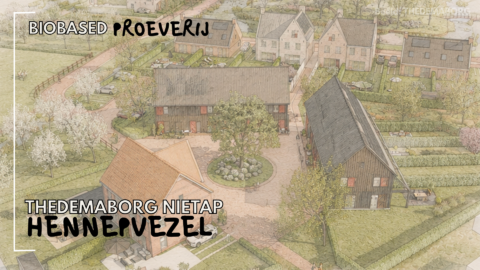
2. Popular locally, but industrially unfeasible (The scale isn’t right) Here, the technology works, but scalability falls short. BouwBoeren is a good example of this: cultivation, processing, and prefab construction in a single regional biobased supply chain. It sounds appealing, but machinery, certification, quality assurance, and logistics require fixed costs that can only be recouped with large volumes. Anyone looking to set up a building materials supply chain needs not only a compelling narrative about raw materials, but also rock-solid guarantees regarding tonnage, cubic meters, and guaranteed market demand.
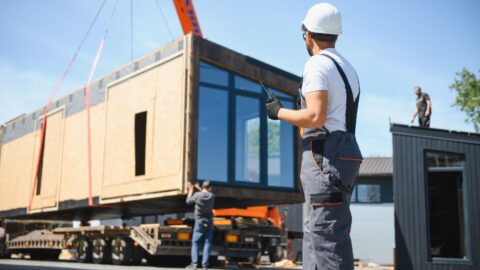
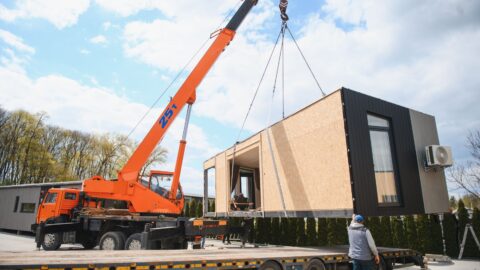
3. Stuck in reality (The system isn’t adapting) This is the most painful category. Innovations with real potential that fall by the wayside because the ecosystem remains stagnant. Take circular construction, for example. Technically, it’s perfectly possible to reuse steel trusses from demolition sites without modification. But in practice, the process hits a brick wall due to a system of standards, CE markings, and insurance requirements that’s blindly geared toward brand-new materials with factory documentation. Modular builders, too—who churn out homes from the factory at lightning speed—constantly run up against this systemic reality. Their model relies on standardization, but in practice it gets bogged down by more than three hundred municipalities, each with its own aesthetic requirements and local permitting processes.
Or consider the current grid congestion. The technology to unlock industrial parks or residential neighborhoods tomorrow using private grids, neighborhood batteries, and smart control has long been available. But the rigidity of existing energy legislation and the traditional division of roles among grid operators turn smart, local electricity sharing into a legal quagmire. In all these cases, it is not the technology that fails, but the path from “innovation” to “the new normal.”
The real obstacles
We stubbornly continue to treat innovation in our sector as if it were merely a technical puzzle. We fixate on the readiness of the technology and initial market interest, assuming that the system will then follow naturally. But the real obstacles aren’t marked on a blueprint; they’re firmly built from entrenched institutional frameworks.
Innovators crash and burn on sluggish bidding processes that invariably demand proven reference projects. They get bogged down in permitting processes designed exclusively for familiar, traditional technologies. They run aground with insurers and financiers who blindly base their risk models on existing standards—standards that simply do not yet exist for new solutions. Moreover, they fail because the system refuses to collectively share the startup risks—risks that, during a transition, are impossible for any single party to bear alone.
A working product does not yet constitute a market. An enthusiastic pilot does not yet constitute a supply chain. Commercial interest does not yet guarantee institutional integration. A higher TRL score does not yet constitute a systemic breakthrough, and a hundred demonstration projects do not yet make an innovation “mainstream.”
From innovation to sector-wide renewal
The painful lesson learned from analyzing several years of construction innovations is therefore not that we should innovate less. The lesson is that we need to be more selective and better at implementing them.
First, a rigorous assessment must be conducted to determine whether the physics, economics, and scalability make sense. Is the answer yes? Then organize whatever is necessary to integrate these promising innovations into the system. That means: establishing norms, sharing risks fairly, setting standards, securing funding, and having the courage to stop endless incentives as soon as making them mandatory is the logical next step.
Over the past fifteen years, the construction industry has not lacked innovations; it has simply failed to organize enough sector-wide renewal. Innovation shows what is possible. Sector-wide renewal determines what becomes the norm. That is a fundamental difference. And as long as we continue to ignore that difference, we will simply keep piling new promises on top of old disappointments.

This is an article from Construction and Installation Hub. Want to keep up with all the news from the construction and installation industry? Then take a look at the hub and sign up for the online community.
↗