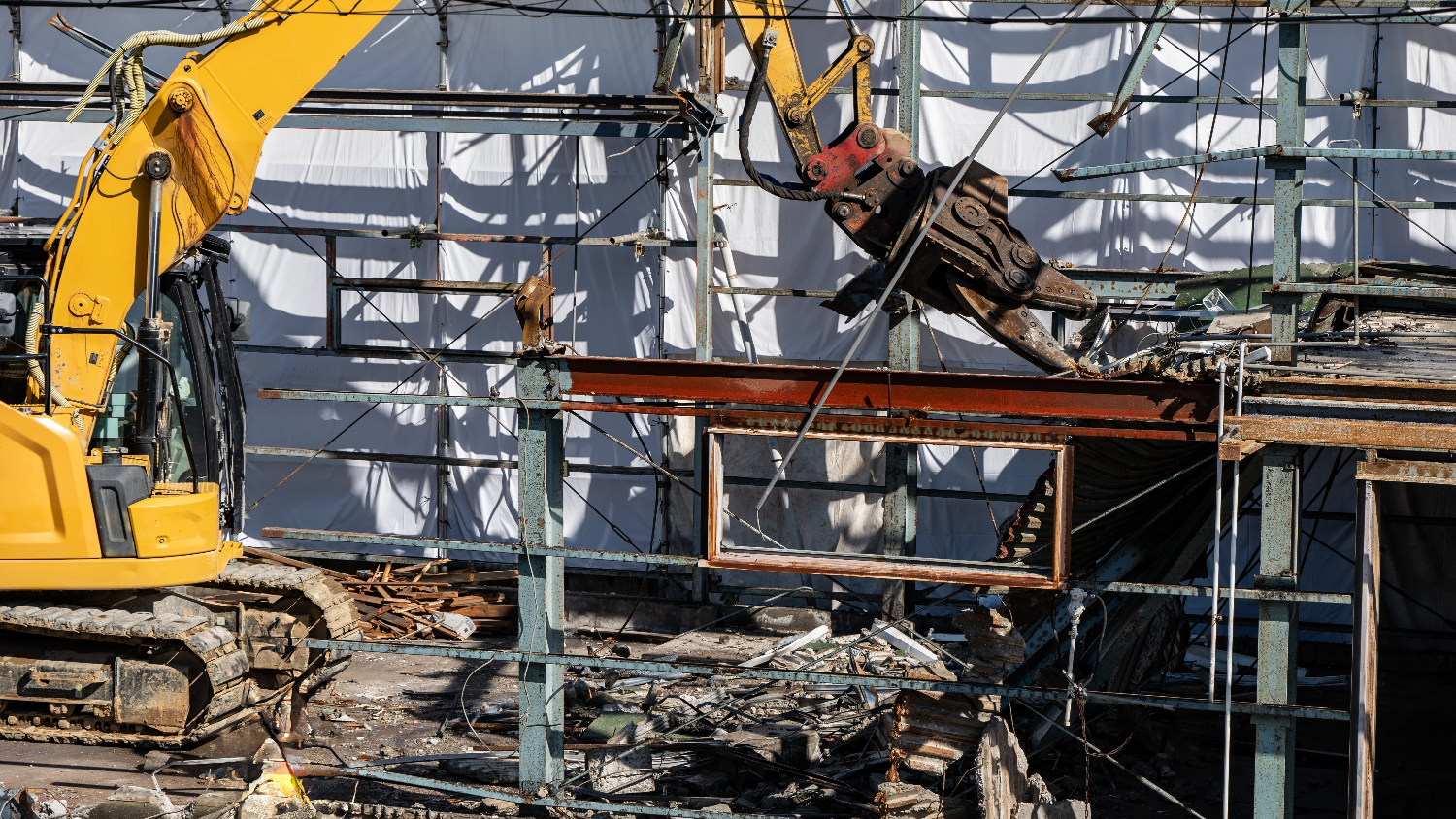
What materials are in a building that’s being demolished? How much material is there, and what can be reused? What is the CO2 impact of the demolition? It takes an enormous amount of effort to answer those questions accurately. The new Reusemate tool simplifies this process using AI. And according to its creator, that offers many advantages.
The buildings currently being demolished do not have a materials passport. So you have to find another way to determine which material flows are generated during demolition. Based on various types of data—such as construction drawings, photos, and even asbestos reports—the new tool can quickly and accurately determine the total quantity of material, its weight, and what it’s made of. For clients and demolition contractors, this is extremely valuable information that is also required by law to be collected. At the same time, the tool will provide real insight into reuse.
Good at making assumptions
By using Reusemate, demolition companies should be able to calculate demolition costs much more quickly and accurately, as well as generate standard reports and provide documentation for certifications and clients who are becoming increasingly demanding in terms of environmental standards. On top of that, the platform offers insight into the CO2 impact of projects.
You can import virtually any type of data into it—from simple PDFs and photos to PowerPoint presentations and 360° images. “The main challenge is structuring the data so that it can be verified at every step,” says Hermen van de Minkelis, creator of the tool and founder of Reusemate. According to him, the tool’s accuracy depends primarily on the quality of the data you enter. “Of course, you have to consider what’s under the floor and above the ceiling—things that aren’t visible in the photos. But fortunately, AI is good at making assumptions about what’s typically found in a standard building. And it’s an advantage that there’s a lot of repetition in buildings. For example, you’ll find the same type of window frames everywhere.”
Administratively demanding work
Van de Minkelis started out as a consultant in circular construction. With his company, Sloopcheck, he then began mapping out the materials in buildings slated for demolition. But that was a frustrating task, he says. “Mapping out everything can be done in half a day. But then you’re left with a mountain of data and a mental image of the building. Translating that into an accurate list is incredibly difficult. It’s very labor-intensive administrative work.” So they created a survey tool that worked well for them. They’ve now sped up that heavy administrative workload many times over with AI.
According to Van de Minkelis, Reusemate’s mission is to digitize everything related to demolition. To that end, they want to make it as easy as possible to enter the data. According to Van de Minkelis, this digitization ensures that the information is then used in various phases of a demolition project. Not only during the bidding process, but also in terms of what actually happens on-site.
Reward what has been achieved
Van de Minkelis believes there is great value in that. Because the data is well-structured, it can be used by various links in the chain. The demolition contractor can set a more accurate price, and the client knows exactly what’s in their building and what to expect. But it’s just as important to ultimately be able to clearly see what actually happens next—especially when it comes to recycling.
“As a client, you want to focus on what actually happens, not just the plan. You want to reward a contractor for what they actually achieve. In tenders for total demolition, all sorts of promises can be made about reuse, for example. For some clients, that’s very important, but it’s very difficult to gain insight into what actually happens to the materials.” According to Van de Minkelis, proper record-keeping is essential for this. “We have all kinds of ways to actually demonstrate reuse.”
Demolition Information Model
The key is that all the information in the model is also linked to the actual material flows during demolition—Van de Minkelis places great emphasis on this. “There’s a standardized form that comes with the waste—the accompanying letter—which you use to count the actual material flows. The waste collector also always has a weighbridge on site, so you can see exactly what’s coming out of a building. We make it easy to enter that information directly. That way, you record all material flows—including reuse. We can provide proof that a component from a building actually goes to a customer. That truly makes this a DIM—a Demolition Information Model—comparable to BIM. You can use it to manage the demolition process from the very beginning—the initial inventory—until the building is completely gone. It allows the information to flow throughout the entire chain.”

This is an article from Construction and Installation Hub. Want to keep up with all the news from the construction and installation industry? Then take a look at the hub and sign up for the online community.
↗