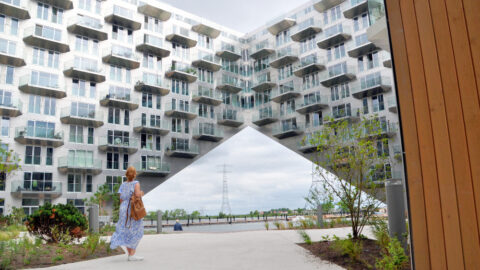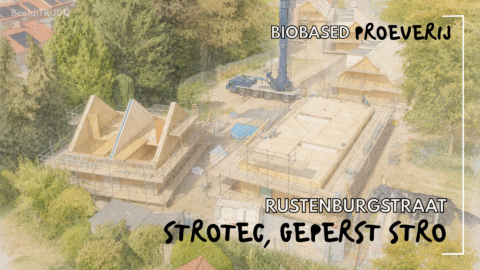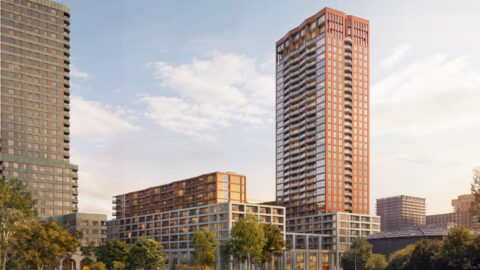
A new village is being built in the municipality of Zuidplas. And they’re even calling it a “future-proof” village. In this episode of Post Fossil Building, Ronald Rovers can’t help but facepalm. “Have they completely lost their minds?”
I know, day-to-day concerns keep you busy, and you get bogged down in endless discussions about CO2 storage, material choices, interpretations of unnecessarily complex calculation tools, and so on. No time for the real questions—the world keeps turning. Sure, but do life and construction keep moving forward too? Everywhere and always? With governments that don’t make real choices? Okay. We elected them ourselves, but so what?
Surely it can’t be true— arewe really going tobuild at -6 NAP now? Have they completely lost their minds!? The land is sinking, sea levels are rising, but they’re just letting it happen. The heat must have gone to their heads. It’s symptomatic of all our problems. They’re seen as challenges, not as real problems.“Come on now, that sea-level rise, that land subsidence—we’re not just going to sit back and let that happen. That’s a technical challenge; as the Netherlands, we have a duty to rise to it.” Everyone is getting overconfident.
I’ll be honest: I think it’s outrageous that construction companies or project developers are still participating in building below NAP level, knowing everything that’s coming our way.
The fact that the government is powerless does not relieve us of the duty to continue thinking for ourselves, to use our common sense, and to reject nonsensical plans. Still, I know of only one company that no longer builds below sea level in rural areas (though it does still build below sea level in urban areas, since those are likely to be protected). And that, of course, is far too few; we must all follow that example and collectively refuse.
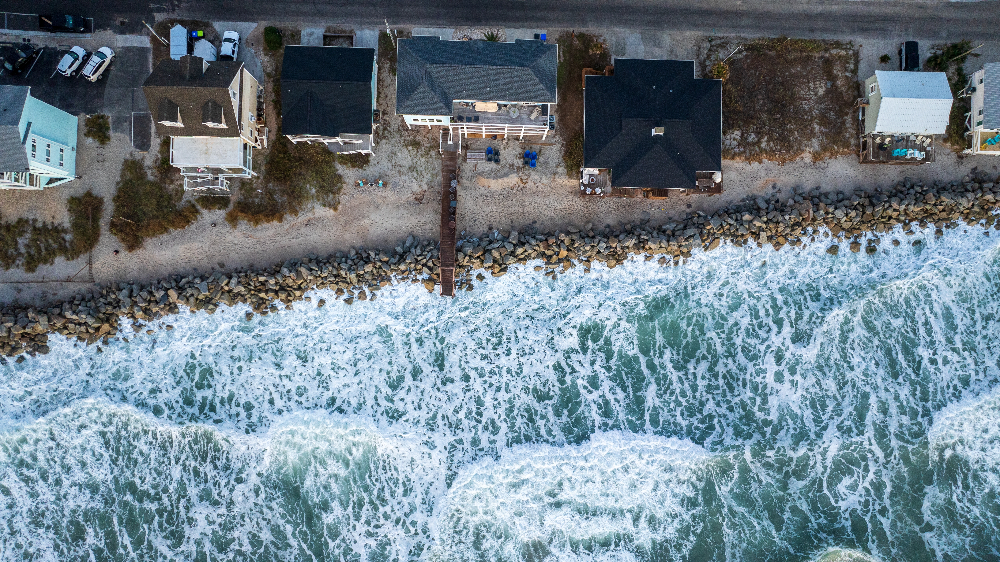
Or are you happily continuing to build under the motto “work is work”? If so, be aware: by developing and/or building below NAP, you are knowingly putting people at risk. Because no guarantees can be given—the water can come from three directions. Sooner or later, insurance companies and mortgage lenders will start making things difficult, driving up costs; water boards will impose requirements under (water) pressure or stop providing guarantees; and so on. On top of that, the land is already subsiding on its own.
And we’re not just building below sea level—no, we’re going to build, for example, at the lowest point in our country, at -6 meters below sea level, in the Zuidplaspolder near Gouda. It’ll be a case of pump or drown. But what if the power goes out for an extended period?
I am in favor of a ban—or at least a moratorium—on construction below sea level, even below +1 meter above sea level. Unfortunately, that’s not going to happen, so it should only be allowed if:
- There is a disaster plan;
- Full compensation in the event of disasters is guaranteed by the builder/developer for up to 50 years after construction;
- a fund is being established to finance rescue operations if necessary;
- Guarantees are provided for another home if necessary;
- There is a ban on passing the costs on to Dutch citizens who live above NAP.
But that’s not going to happen either. So all that’s left for me to do is make this appeal: Boycott everyone who is still involved in construction below sea level, in any form whatsoever. There’s plenty of work out there, but no more below sea level!
“Don’t help build below sea level!”
About the author of this column, “Post-Fossil Construction”
Ronald Rovers is a former professor, physical fundamentalist, futurist, and now an author, on a quest to find the ultimate sustainable physical balance on Earth—without fossil fuels, of course. He calls Productive Land “our true capital—for food, energy, water, and materials.” And that requires us to live “vegetarian” lives—and thus also to build “vegetarian” structures. In that light, I explore the future of construction here. More on this. You can read Rovers’ articles here. Or check out his own website.
This is an article from Construction and Installation Hub. Want to keep up with all the news from the construction and installation industry? Then take a look at the hub and sign up for the online community.
↗